



















Top Night Sky & Astronomy Events in June 2022
1. Introduction
We’ve made it nearly halfway through 2022! The first half of the year brought some much-needed excitement to the astronomy community thanks to increasing solar activity, lunar eclipses, meteor showers, newly identified supernova, and much more. With June ringing in the Summer Solstice and the official beginning of summer for the Northern Hemisphere, the next few months will bring even more excitement to our skies. To help prioritize your astronomical observing and imaging sessions for June, we have put together an overview of this month’s highlights to get you out under clear skies and looking up at the cosmos. Gear recommendations and highlights from the astronomy community are included to give you a good idea of the tools needed (or not needed) to enjoy the night sky.
2. Solar System Observing & Imaging
The first and last weeks of June will be prime time for dark skies, with the New Moon having passed on May 29th and returning June 28th. Lunar observers and imagers will also witness the June “Supermoon” on June 13th, with the Full Moon making its closest approach of the year. Cruising through an orbit tens of thousands of miles closer to Earth than average, the June Supermoon will appear a bit brighter and larger than normal. Head outside on June 13/14 to have a look and compare your images and observations to past Full Moons!
Moon Phases
- 1st Quarter: June 6
- Full Supermoon: June 13/14
- Last Quarter: June 20
- New Moon: June 28
Solar System Events
- June 21st: Summer Solstice – the beginning of summer in the Northern Hemisphere.
- June 21st: Moon/Jupiter conjunction
- June 22nd: Mercury, Venus, Mars, Jupiter, Saturn all visible in the morning sky before sunrise.
- June 22nd: Moon/Mars conjunction
- June 24th: Moon/Uranus occultation – only visible in northwest Australia and southern Indonesia
- June 26th: Moon/Venus conjunction
- June 27th: Moon/Mercury conjunction
3. Deep Sky Objects (Nebulae, Galaxies, Clusters)
Many amateur astronomers and astrophotographers have been anxiously awaiting the summer months! This time of year signals the slow return of the colorful nebulae that captivate so many eyes and offers an opportunity to image at any focal length, through any light pollution, and regardless of the Moon phase thanks to narrowband imaging. While many will be turning to narrowband imaging in the early morning hours when the nebulae begin to rise, the nighttime sky still houses an abundance of galaxies and other targets worthy of your attention. Let’s look at some of the targets you can see for most of the evenings in June, and equipment recommendations to capture these and similar objects in the coming months.
Supernova 2022HRS / NGC 4647
This target is already high in the sky after sunset, but a chance to capture a newly discovered supernova is hard to pass up! Supernova 2022HRS was only recently discovered in April 2022 by an amateur astronomer and is believed to be the remnant of a collapsing white dwarf star located within NGC4647. Even sitting 63 million lightyears from Earth, amateur astronomers and astrophotographers with modest to longer focal length telescopes will be able to capture this glowing supernova with relative ease. If you’ve imaged this region of the sky previously, be sure to compare your images to see the change.
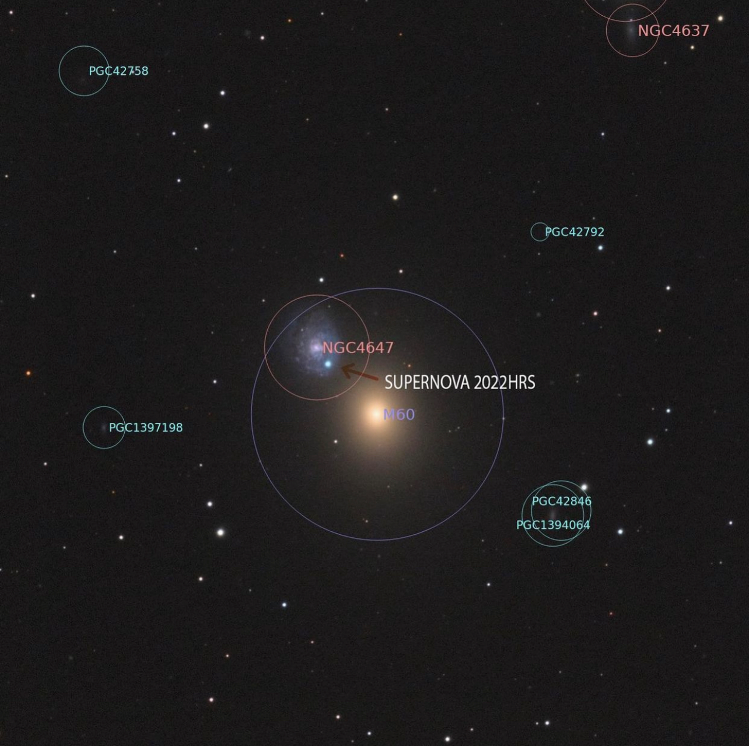
Figure 1 - Supernova 2022HRS, Brandon Lewis
Interacting Spiral Galaxy Pair ARP271
Those looking for a less commonly imaged target will find a bit of a challenge in the NGC5426/5427 combo referred to as ARP271. At around 130 million lightyears away with a magnitude of 12.5, this target is quite small and faint, requiring longer focal lengths and aperture for a truly detailed image.
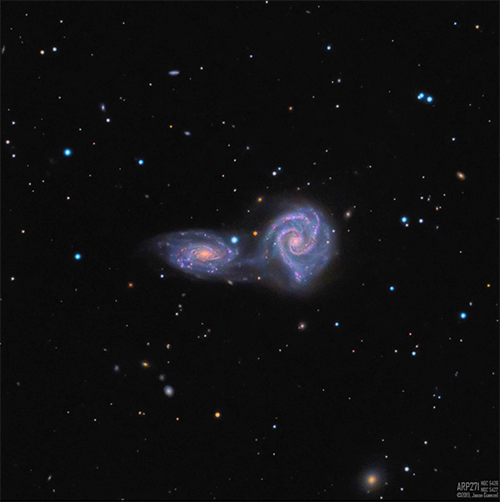
Figure 2 - ARP271, Jason Guenzel
Milky Way Core
With the primary focus of astrophotography being the use of telescopes to peer deep into the universe, it can be easy to forget about one of the most beautiful and personal targets around – our own Milky Way Galaxy! As we enter June, the Milky Way core will become increasingly more visible to those in dark skies as we turn our eyes inward on the galaxy. Milky Way imaging can be a great first step into astrophotography with a basic star tracker (such as the iOptron SkyGuider Pro Equatorial Mount or Sky-Watcher Star Adventurer Mini Pro) and a DSLR camera/lens!
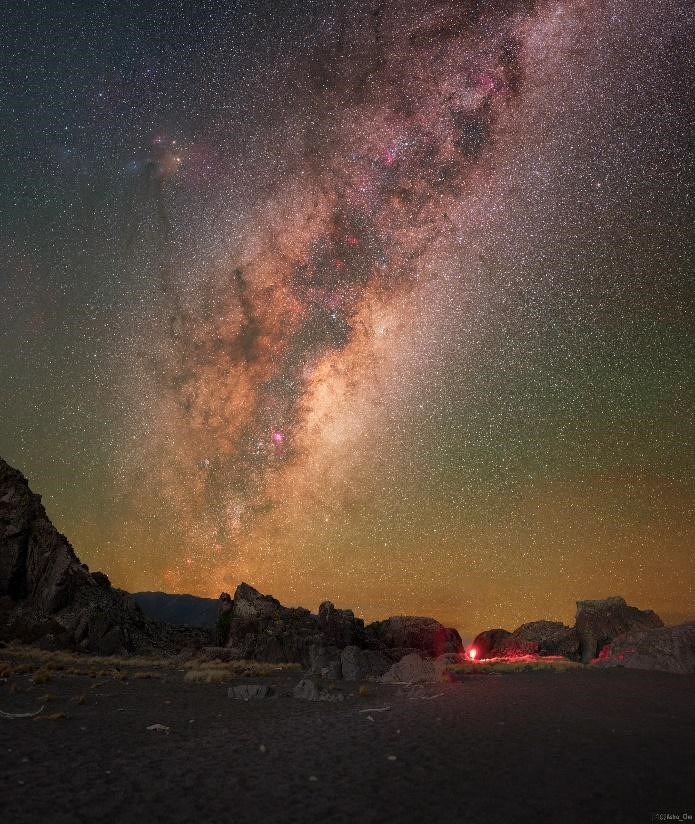
Figure 3 - Milky Way, Chester Hall Fernandez
Dumbbell Nebula
The Dumbbell Nebula will be rising after 9:00pm in the eastern sky and offers an opportunity for both astrophotographers and visual astronomers to catch a view of a planetary nebula. The Dumbbell Nebula provides us a glimpse at the potential future state of our own Sun, transitioning at first into a red giant, and then shrinking down to a white dwarf before meeting its ultimate end as a planetary nebula. Narrowband filters (such as the Antlia ALP-T Dual-Band) which isolate the hydrogen and oxygen wavelengths of light will help to reveal the fainter details in this otherwise bright target. At magnitude 7.5, the Dumbbell Nebula is easily visible with a telescope and eyepiece.

Figure 4 Dumbbell Nebula, David Snell
Elephant’s Trunk Nebula
Similar to the Dumbbell Nebula, The Elephant's Trunk Nebula will be making its appearance in the low northeastern skies around 9:00pm throughout June. The Elephant's Trunk Nebula is believed to also be an active star forming region in the constellation Cepheus, so we recommend trying your hand at imaging this target in traditional RGB to capture the true colors of these young stars. These RGB stars can be integrated into narrowband image data as well to capture the abundance of hydrogen and other elements while retaining the natural star color. Wide-field telescopes will be able to include the hydrogen-rich structures surrounding the Trunk into the frame, while longer focal lengths will be able to resolve the finer details within the Trunk itself.
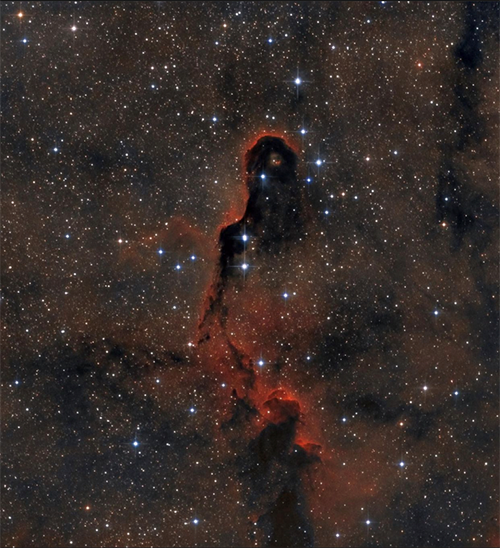
Figure 5 - Elephant's Trunk Nebula, Tommy Lease
4. Gear Recommendations
The June skies can be appreciated with any level of equipment, but the most memorable experiences with the night sky typically come by using telescopes, eyepieces, and cameras to bring as much of the cosmos to your eye as possible. The gear recommendations below will meet the needs of anyone hoping to observe and image this month’s astronomical events and recommended targets.
Celestron C8 Schmidt-Cassegrain Telescope
For both visual astronomy and astrophotography, the Celestron Schmidt-Cassegrain telescopes are highly popular for their quality optics and longer focal lengths. The 8-inch SCT offers over 2000mm of focal length, making it a perfect fit for this month’s recommended galaxy targets. The Celestron C8 is available in a variety of telescope/mount packages such as the Celestron Advanced VX 8" SCT Package , which will easily support this lightweight optical tube.
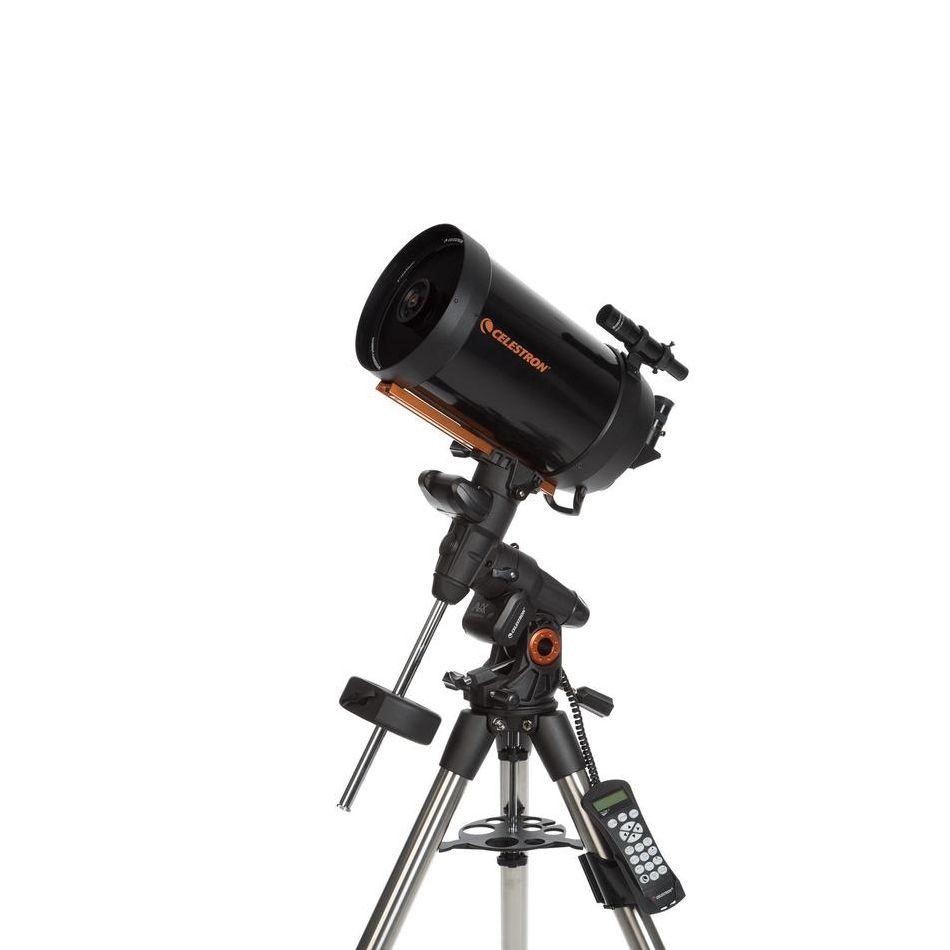
Figure 6 - Celestron Advanced VX C8 Package
William Optics GT71 f/4.9 Refractor
The William Optics GT71 is a 420mm f/5.9 triplet refractor, perfect for capturing wider views of the Elephant's Trunk Nebula. This portable refractor can be easily transported to your favorite imaging destinations in the included soft carrying case and its lightweight design requires only a modest equatorial mount for accurate tracking. The GT71 pairs nicely with a variety of astronomy cameras such as the new QHY 533M Cooled Monochrome Camera, and will provide illumination and a flat field for up to 97% of a full frame sensor for an even wider field of view!
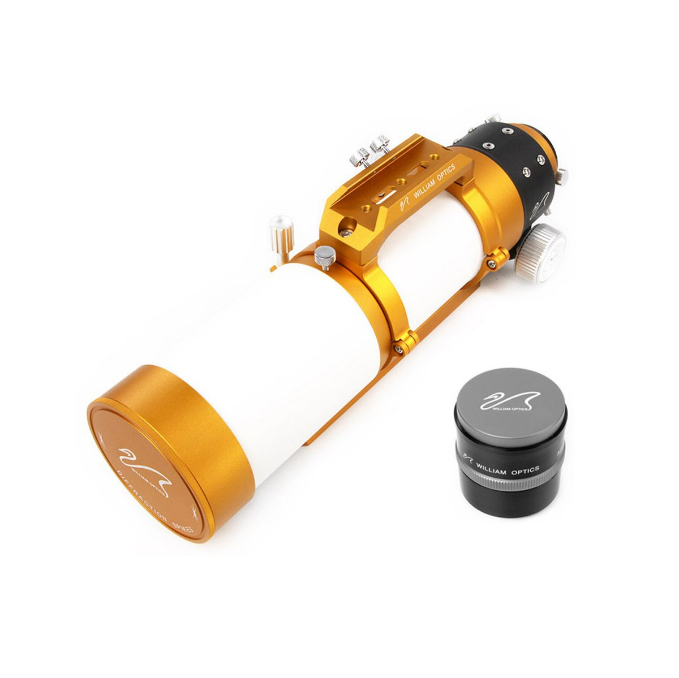
Figure 7 - William Optics GT71
Celestron StarSense Explorer DX 130AZ Newtonian Reflector
This telescope is recommended for those with little to no previous telescope experience. The Celestron StarSense Explorer technology uses your smartphone camera to analyze star patterns overhead and calculate its position in real time, automatically generating a list of objects visible from your location and directing you to your selected target! Simply connect your smartphone and open the StarSense Explorer app for a guided tour of the night sky.
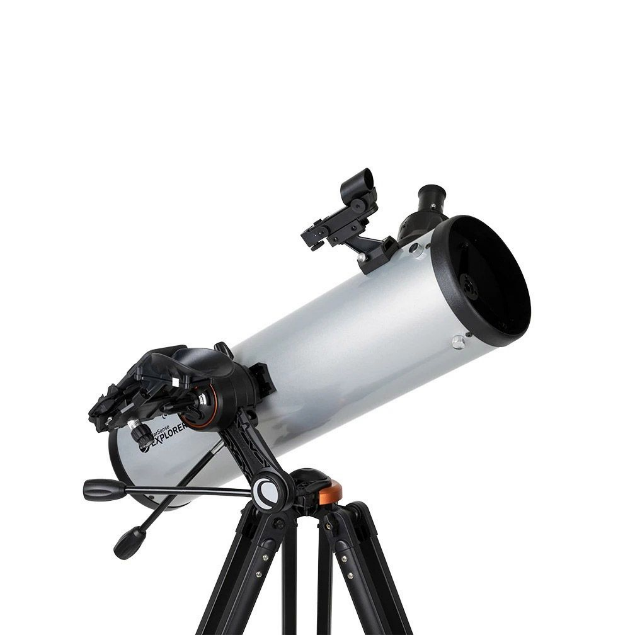
Figure 8 - Celestron StarSense Explorer DX 130AZ
Berlebach Adjustable Observer’s Chair
With a full lineup of planetary conjunctions in June, this month will be excellent for anyone looking to simply observe the night sky through an eyepiece. The Berlebach Observer’s Chair can be height adjusted up to 37 inches, giving you a range of comfortable seating positions as your telescope tracks the sky. An optional Berlebach Foot Rest can be added for additional comfort during longer observing sessions.
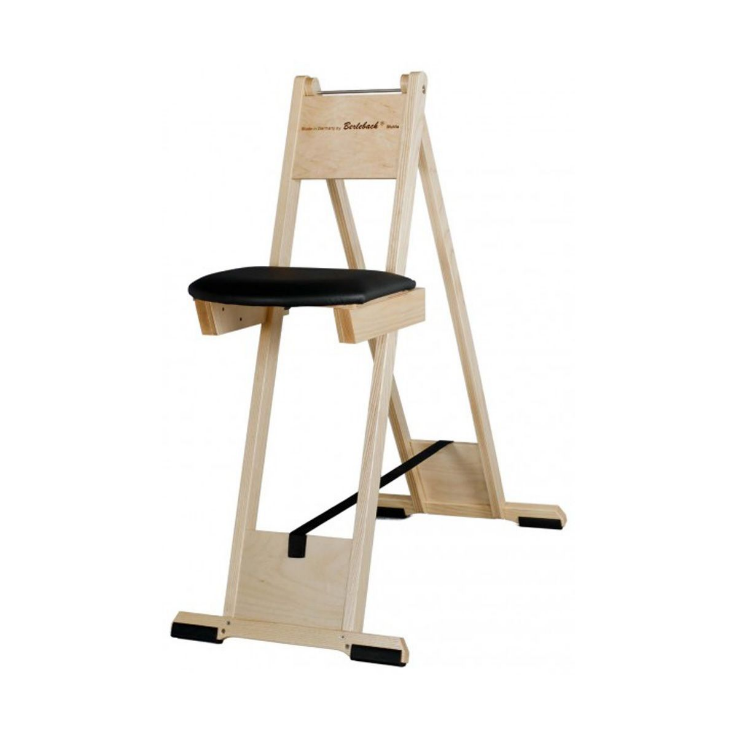
Figure 9 - Berlebach Adjustable Observer's Chair
*Follow us on Facebook and Instagram to stay up to date on the latest gear, sales, and news from Agena!*